 English
 Romanian
AB Academy
- May 21, 2026
Did you have a midwife around when you gave birth? Did a midwife advise you before or after birth? The chances that the answer is negative are very high. Romania not only fails to give importance to this profession, which would bring so many benefits to the country, but also shows signs of wanting to bring the midwifery specialization to historical lows.
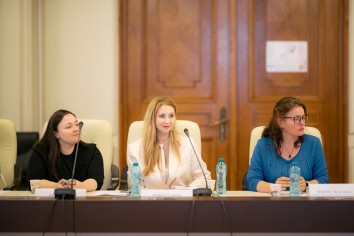
I had the honor of presenting the British perspective on the midwifery profession today in the Chamber of Deputies. In the debate about the Autonomous Role of Midwives in Romania, I was also able to listen to and learn from the perspectives coming from Belgium, France, Sweden, or Norway. The direction given by the UK represents, from my point of view, an extremely complex approach, from which Romania definitely has something to learn.
In Great Britain, midwives serve both community health centers and family doctor practices. They can help, in certain NHS trusts, even with home births when they carry very low risks of complications. Midwives in the UK can also work on Labour Wards, where they help bring babies into the world in a hospital environment.
You will probably be amazed by the multitude of specializations of midwives in the UK, starting with Bereavement Midwives, dedicated to assisting families after pregnancy loss or neonatal death. There are midwives who work with women with type 1/2 or gestational diabetes: Diabetes Midwives. There are Infant Feeding Midwives, experts in breastfeeding babies. And Fetal Medicine Midwives, who deal with congenital anomalies. Domestic Violence Midwives are educated to identify and support abused pregnant women. Substance Misuse Midwives work with pregnant women addicted to drugs or alcohol. I do not think we need to give more details about Teenage Pregnancy Midwives, and the same applies to Perinatal Mental Health Midwives, who bridge the gap between psychiatry and maternal care.
What are the benefits of encouraging the expansion and recognition of the midwifery profession?
First, it relieves the pressure on obstetricians, who can thus deal with complex cases.
It would probably reduce the number of unnecessary C-sections if pregnant women learned from a midwife what birth truly means.
The presence of midwives would cover rural areas, where few women have access to top obstetric clinics.
It would reduce costs in the healthcare system — visiting a midwife for monitoring is one thing, scheduling an appointment with a specialist doctor is another.
It would address the very frequent issue of postpartum depression in Romania, which too often goes undiagnosed.
And, last but not least, it would lead to the retention of midwives in the country, because many pursue their professional development in countries like the UK, Belgium, or the Netherlands.
Romania has the professional expertise and the legislative context to take this step. What is missing is the political will.
We thank Senator Ruxandra Cibu Deaconu, the Secretary of the Health Committee in the Romanian Parliament, and Ms. Irina Mateescu, the President of the Romanian Midwives Association. Today's initiative can move mountains!
You may also like
First lesson of English for Holidays! ☀️🌴
Jun 29, 2026
Anja, examen clasa a V-a
Jun 25, 2026
Filip, rezultat Cambridge
Jun 25, 2026

Catalin. Dentist. The Netherlands.
Jun 02, 2026